
Hinesville Public Records by Custodian
Hinesville public records do not sit in one database. The City Clerk handles city legal documents and coordinates municipal open-records requests. The Liberty County Clerk of Superior Court keeps deeds, plats, liens, trade names, and files for several trial courts. Property data comes from the Board of Assessors and GIS. Probate Court, the Health Department, the sheriff, and state agencies each control other sets. The table leads with the keeper because the correct custodian determines whether a search is online, a counter inspection, or a restricted certificate order.
| Hinesville Record Set | Official Keeper | Web Route | Access Status |
|---|---|---|---|
| Deeds, plats, liens | Liberty County Clerk of Superior Court | GSCCCA deed index | Public index and vault copies; image or certification charges may apply |
| Superior, State, Magistrate cases | Liberty County Clerk | CM Web Search | Free lead search; sealed, juvenile, and protected material excluded |
| Property and tax roll | Board of Assessors, GIS, Tax Commissioner | ArcGIS parcel layer | Free current owner, parcel, address, and tax-link data |
| City records and permits | Hinesville City Clerk or creating department | Request form | Existing nonexempt records by inspection or copy |
| Birth and death certificates | Liberty Health Department and Georgia DPH | No open current name index | Certified copies restricted to eligible requesters |
| Inmate and offender records | Liberty Sheriff, Georgia DOC, GBI | Agency search tools | Published fields only; confidential files remain closed |
The Georgia Open Records Act starts from access to existing agency records, but a statute or court order can control the result. Juvenile court files are confidential. Sealed cases, adoption files, grand-jury material, and protected portions of domestic files are not opened by a broad request. Driver information is governed by the federal Driver's Privacy Protection Act. Current vital certificates have their own eligibility rules. When one file mixes open and closed facts, ask for the segregable, nonexempt part rather than assuming the entire record must be released.
Search Hinesville Clerk Records
The Liberty County Clerk of Superior Court records land instruments and keeps Superior, State, and Magistrate court files. Its deed route is the GSCCCA real-estate index. A grantor is the party giving an interest, while a grantee receives it. Name mode is useful for deeds and liens; book and page retrieve a known citation. Property and instrument modes offer other routes, though premium detail and images may require an account or product charge.
| Search Mode | Record Target | Access Note |
|---|---|---|
| Name Search | Grantor or grantee | Conditional name-index route |
| Book Page Search | Known book and page | Direct citation retrieval |
| Property Search | Property-linked instruments | Property-oriented mode |
| Instrument Type Search | Selected filing types | Labeled premium |
| UCC Basic Name | Debtor index | Basic filing-name route |
| UCC File Number | Known filing number | Exact-number route |
Liberty County says all land records filed since 1777 have been digitized and are being re-indexed. That statement does not establish a complete 1777-forward online name index. If a name search fails, the real-estate vault at the Liberty County Justice Center still provides inspection and copying of manually made and automated records. The clerk also offers electronic certification for court and real-estate records at any hour.
Note: A web index points to a filing; a certified copy is the custodian-authenticated record used when formal proof is required.
Hinesville Records Beyond Web Indexes
Digitized does not mean fully indexed. Liberty's surviving land books begin in 1777, but old descriptions may rely on chains, rods, trees, waterways, and adjoining owners instead of a current street address. Those terms can make an older deed hard to locate through a modern name or address box. Search spelling variants, follow a book-and-page citation from a later deed, and consult plats or neighbors named in the description. Physical books in the courthouse vault remain a key fallback while re-indexing continues.
Insider tip. The Liberty court portal itself advises trying every plausible spelling of a proper name. Initials, suffixes, and older spellings can change the result.
This distinction matters for family history, estate research, and a long ownership chain. A missing portal hit is not proof that no Hinesville record exists. It may mean that the book has been imaged but its historic names are not yet easy to retrieve, or that the relevant material is held by Probate Court, Georgia Archives, or another custodian.
Hinesville Property Records and GIS
The Liberty County GIS property system connects a name or physical address to a parcel. Its official layer supports owner name, parcel number, PIN, property address, house number, street, tax district, legal description, and acreage queries. A parcel is the assessor's mapped unit of land. A property's situs is its physical location, which may differ from the owner's tax-mailing address. That split prevents a common mistake: assuming the owner receives mail at the property.
- Index
- A finding tool that points to a record but may not display the full filed document.
- Certified copy
- A copy authenticated by the office that holds the original record.
- Custodian
- The agency or official responsible for keeping and responding for a record.
- Exemption
- A statute or court rule that permits or requires information to be withheld.
The parcel schema also exposes legal descriptions, current and earlier tax-bill links, district data, and historical tax-year fields. Deed-book and plat references provide the handoff from the assessor to the clerk. For current tax-mailing details or a point not shown in the public layer, contact the Assessor or Tax Commissioner. GIS is useful evidence, but county mapping is not a legal survey.
Hinesville Court Records Access
Liberty CM Web Search provides a public entry point for Superior, State, and Magistrate matters. Users first accept its conditions, then search party information. The office does not publish the portal's earliest coverage date. A docket is the running list of filings and events in a case. The complete docket or filed document should be obtained from the Judicial Division at the Liberty County Justice Center, not inferred from a brief index hit.
Hinesville Municipal Court is separate. It handles city traffic, ordinance matters, and limited misdemeanors, but research did not verify a full public party-name portal. Contact Municipal Court for an existing case record or certified disposition. Probate estates and wills also require Probate Court contact because no complete county probate name index was verified.
Juvenile records are confidential. Sealed and restricted files do not appear as normal public results, and absence from a criminal-history service does not prove that no court matter ever existed. Ask the clerk which docket entries or nonexempt portions can be inspected.
Hinesville Vital Records Limits
Current birth and death certificates are not open name directories. The Liberty County Health Department and Georgia Department of Public Health accept eligible requests by local or state walk-in, mail, and online channels. State records begin in 1919. Certified birth and death copies generally require direct and tangible interest under O.C.G.A. §§ 31-10-25 and 31-10-26, photo identification, a signed form, and prepaid nonrefundable fees.
Birth and death certificates cost $25, with $5 for each added same-order copy. A marriage search costs $10, with $5 for an additional copy. State marriage holdings cover June 1952 through August 1996, while Liberty Probate Court is the local route outside that span. The clerk holds divorce decrees; the state can verify divorces only for its stated mid-century period. Current state mail or online processing may take up to ten weeks.
Historical access follows a different path. For events before 1919, check the county of occurrence or Georgia Archives. The Georgia Virtual Vault's indexed Liberty marriage book offers 271 digitized images from 1920 through 1937.
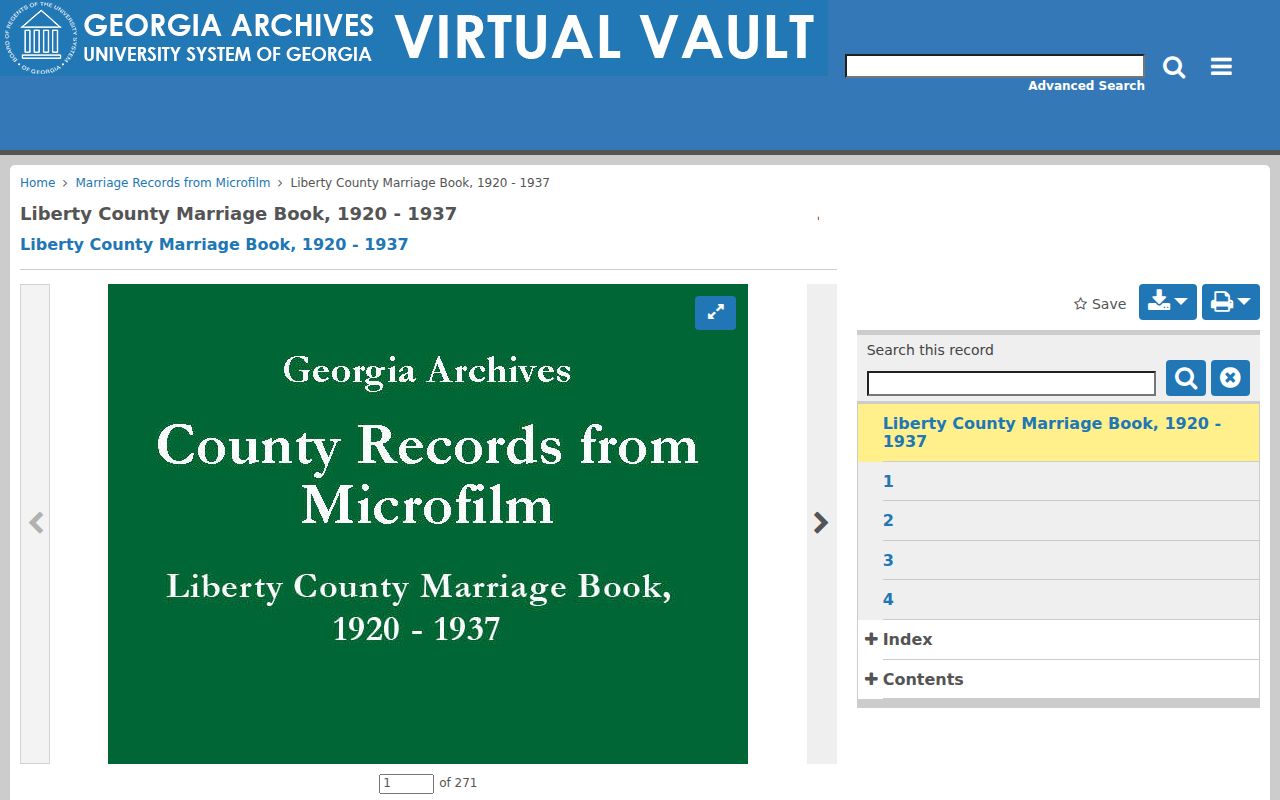
The image shows how an archival index can serve historical research without treating a recent certified certificate as an open browsing record.
Hinesville Offender Records Channels
Custody and registry information comes from separate custodians. The Liberty County Sheriff publishes a current jail-population route and accepts open-records requests by email or phone. The list is drawn from the sheriff's in-house database and carries limits on completeness and reliability. For a current local custody question, verify with the jail. The county list is not a full arrest-history archive.
The Georgia Department of Corrections offender query supports searches by name, description, GDC identifier, or case number for people in state correctional custody.
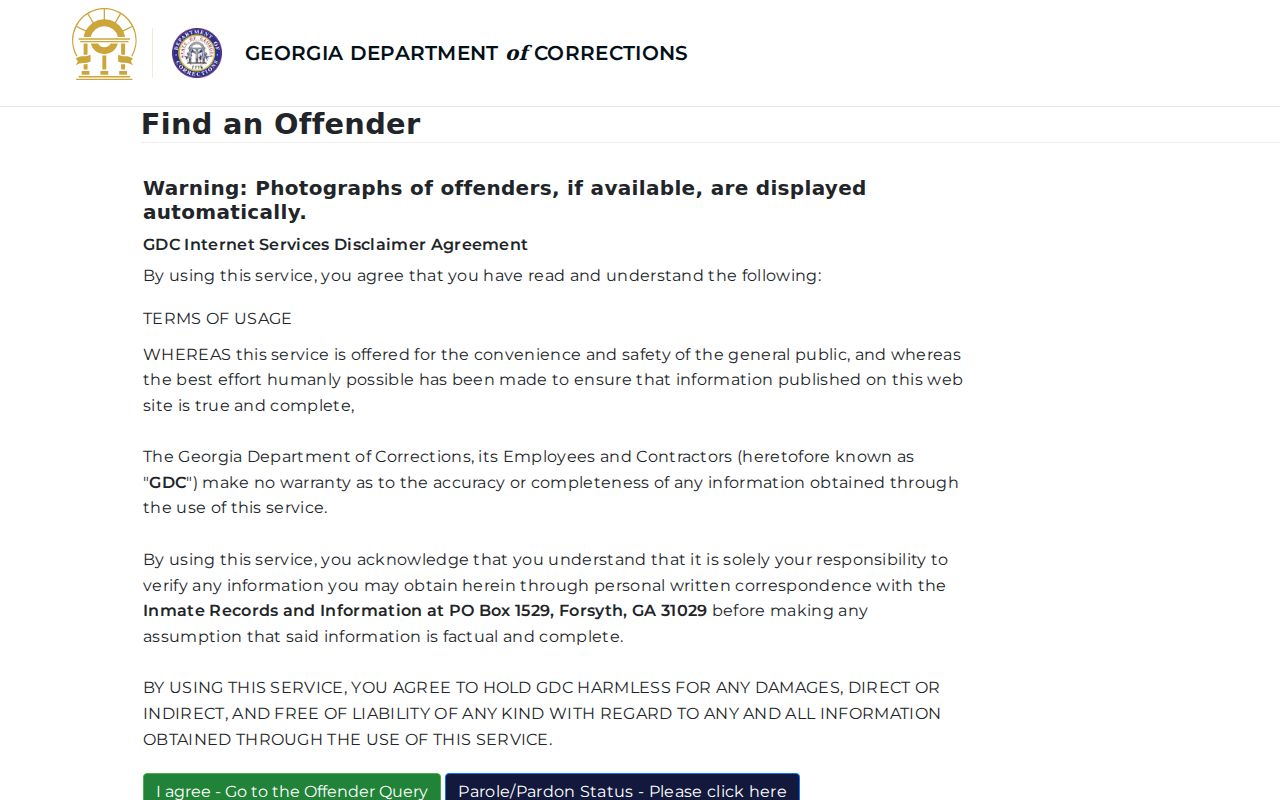
The query can show releasable identity and sentence facts, but institutional, medical, juvenile, victim, and other protected information remains confidential.
The GBI Georgia Sex Offender Registry is a different statutory system under O.C.G.A. § 42-1-12.
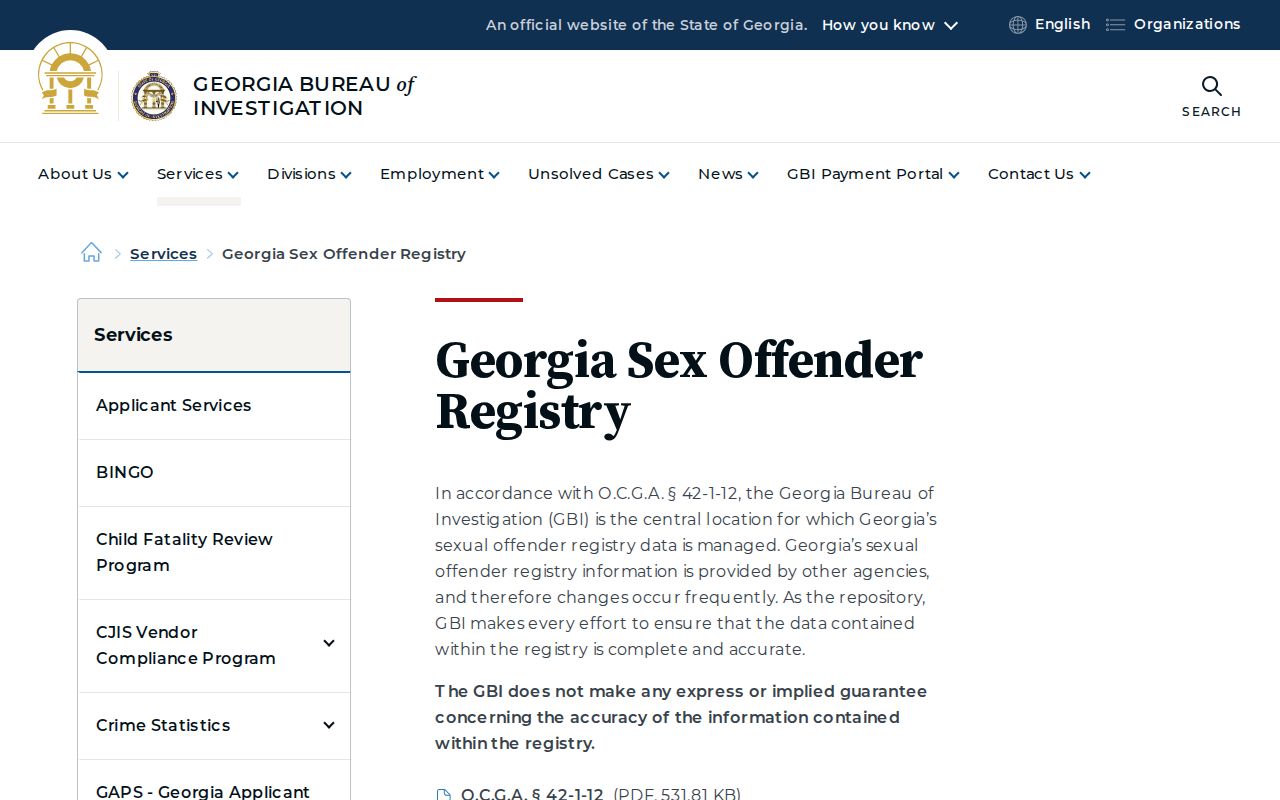
GBI warns that registry data changes often. A failed name or county search may reflect spelling, timing, deletion after death, or a nonqualifying case, so a no-match result is not a universal finding.
Hinesville Open Records Costs
Georgia agencies must use the most economical means. Under O.C.G.A. § 50-18-71, the first 15 minutes of search, retrieval, and redaction labor are free. Later labor may be billed at the hourly salary of the lowest-paid employee able to perform the work. Ordinary letter- or legal-size photocopies are capped at 10 cents per page unless another law sets a specific charge. Electronic delivery should be used where practical.
A custodian may generally require prepayment when an estimate exceeds $500 or when a requester has unpaid prior costs. Specialized clerk, certificate, map, and GIS products can follow their own schedules. Liberty's clerk accepts cash and cards, with a card surcharge, but directs users to confirm the exact transaction price. Ask for an estimate before work begins, narrow a broad date span, and request an existing electronic export rather than a new custom report.
Note: The Open Records Act reaches existing files and database exports; it does not force an agency to answer questions or create a new compilation.
Hinesville Records Offices and Portals
Use the office that created or maintains the record. The City Clerk is the municipal open-records coordinator. County land and trial-court records go to the Clerk of Superior Court, while ownership and parcel questions go to the Board of Assessors. Direct contact also supplies the fallback when a dynamic portal fails, a historical date is not indexed, or certification is needed.
Liberty County Clerk of Superior Court
201 S. Main St., Suite 1200, Hinesville, GA 31313
912-876-3625
Hinesville City Clerk
115 East M.L. King Jr. Drive, Hinesville, GA 31313
912-876-3564
Liberty County Board of Assessors
100 Main St., Suite 1550, Hinesville, GA 31313
912-876-3568
Request Hinesville Public Records
The Georgia Open Records Act, O.C.G.A. §§ 50-18-70 through 50-18-77, lets any person request an existing nonexempt agency record without explaining a motive. A written request preserves enforcement options. An agency must produce available records within three business days or send a written timetable, cost estimate, and exact legal citation for withheld material. Hinesville supplies a city request form for municipal files.
- Identify the city, county, court, or state custodian. Name the record series instead of asking an office to conduct research.
- Check the official index first. Save a case number, parcel number, book and page, date, or other identifier that narrows the work.
- Send a written request to the designated officer. Give names, address or case details, a date range, and the preferred electronic format.
- Ask for a cost estimate before charges are incurred. Choose inspection or the least costly useful copy, and pay a certification fee only when needed.
- If access is denied, request the exact Code citation and all segregable open portions. Narrow the scope or seek Attorney General mediation when appropriate.
Lawful use. Open access supports civic review and personal research. It never permits stalking, harassment, intimidation, fraud, or disclosure of a protected person's address.
Safe at Home, effective July 1, 2026 under O.C.G.A. § 50-18-150 et seq., gives eligible survivors a substitute address, mail forwarding, and added protection across public records. Georgia does not offer a broad right to erase every truthful public filing. Ask the custodian about a record-specific redaction, and use the official Safe at Home program prospectively when eligible.